[ SYSTEM NODE: INACTIVE ]
ERROR 404: DIRECTORY ACCESS DENIED.
INITIALIZE ROUTING VIA SECURE MERCHANT NODE.
📌 10-SECOND FLASHCARD
An abnormal delay between a high-stakes question and a verbal answer—specifically exceeding their established conversational baseline tempo. The gap signals a massive spike in internal cognitive load: they are filtering an unvoiced objection before delivering a compliant response.
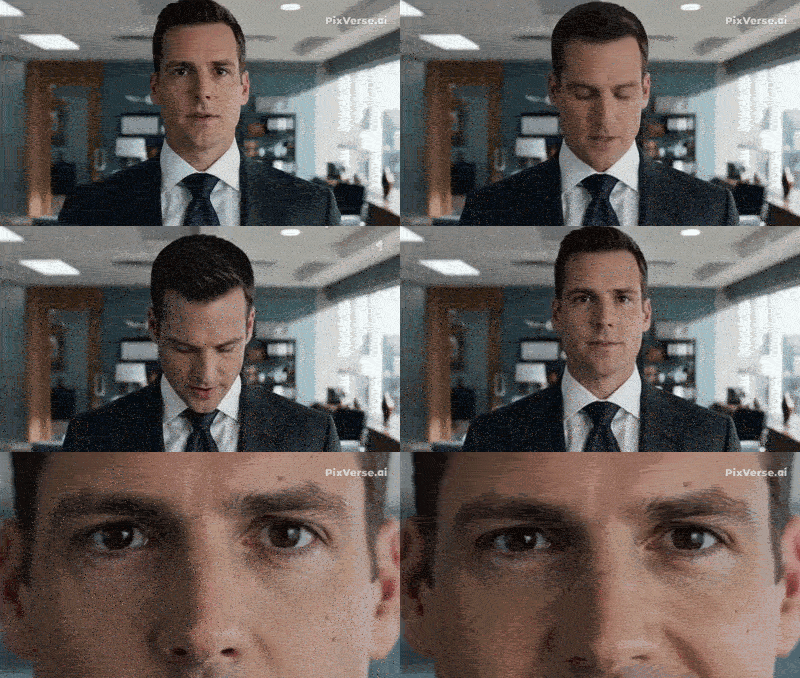
⚡ RAPID PROGRESSION ANALYSIS• PHASE 1 (Baseline): Symmetrical conversational tempo. Natural 200–400ms gaps during low-stakes small talk.
• PHASE 2 (The Gap): A major proposal or accountability question drops. Mouth forms a static seal. Zero audio for 1.5+ seconds.
• PHASE 3 (Delayed Delivery): Verbal compliance is delivered late. Tone is flat, forced, and disconnected from baseline energy.
🎯 BRANCHING TACTICAL ENGINE[PATH A: Direct Accountability Pivot]
"Let's freeze the frame there. I noticed a slight pause before that answer—what underlying challenge are we skipping over?"[PATH B: Commercial/Terms Pivot]
"Let's pause. That structure took a second to land. What specific element of this setup causes the most friction for your team?"[PATH C: Virtual/Zoom Software Reality Check]
"Just checking the feed—are we dealing with an explicit software delay, or does this timeline raise some genuine operational concerns?"
🌐 APPLICATION BLUEPRINTVirtual Room (Zoom / Teams):
Watch for the micro-animation gap: lips part slightly and eyes shift focus during a genuine RLE — the mouth begins to open but no audio arrives. Do not confuse software latency with behavioral latency. Software lag produces a frozen or pixelated image; genuine RLE produces a live, visually animated face with a moving blink pattern. Eye movement confirms the signal is behavioral.Physical Space (Boardroom):
In person, the RLE is accompanied by a full-body micro-freeze. Gesturing stops. Postural micro-adjustments cease. Some subjects hold their breath briefly during the suppression window. The sudden stillness is the tell. Watch for the return of movement as the delayed verbal delivery begins.
🎯 TACTICAL PIVOT SCRIPT
"Let's freeze the frame there. What part of this specific structure presents the primary challenge for your team?"Why this works: Naming "the frame" signals that you registered the hesitation without confronting it directly. Targeting "your team" externalizes their objection — it gives them a professional vehicle to voice the reservation as a logistical concern rather than a personal rejection.
🧠 MODULE 2: THE ASYMMETRIC CORNER PULL (ACP)
📌 10-SECOND FLASHCARD
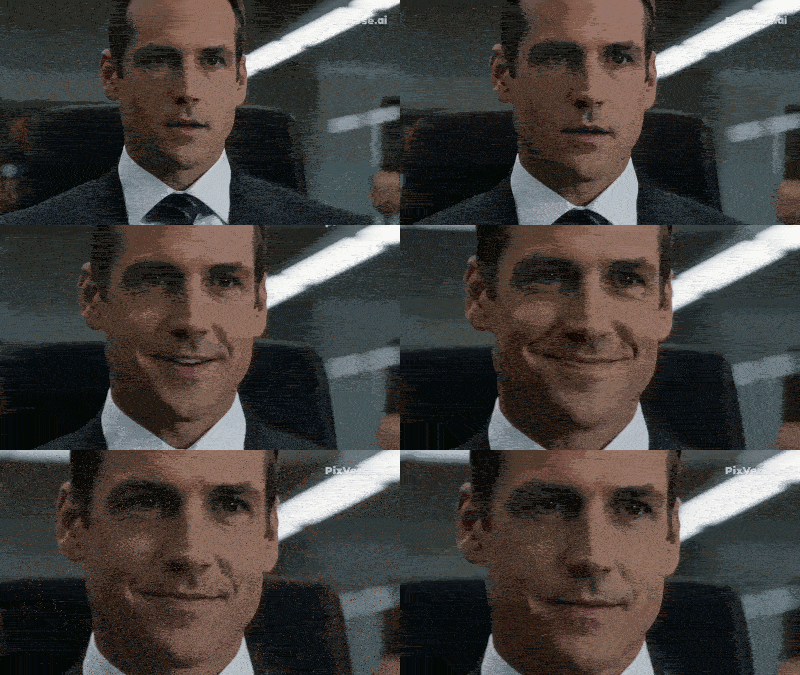
A sharp, unilateral lip-corner contraction firing immediately after a proposal finishes. It signals internal valuation conflict, perceived status advantage, or immediate unspoken rejection. The primary tell: one side moves, the eyes stay dead.
⚡ RAPID PROGRESSION ANALYSIS• PHASE 1 (Baseline): Symmetric speech execution. Both corners move evenly.
• PHASE 2 (The Freeze): Sudden vocal termination. Lips lock into a flat, rigid horizontal line for 200–500ms.
• PHASE 3 (The Pull): A single mouth corner retracts sharply toward the ear. Opposite side remains static.
🎯 BRANCHING TACTICAL ENGINE[PATH A: Financial/Budget Resistance]
"Let's freeze the frame there. Based on how that number hit the room, where does our baseline configuration conflict with your internal targets?"[PATH B: Delivery/Logistical Skepticism]
"I'm sensing some structural reservation regarding execution. What specific bottleneck are we leaving out of this timeline?"[PATH C: General Disapproval or Pushback]
"Let's pause. I'm picking up an immediate mismatch on how this proposal lands. Stripping the pitch away—where does the real friction lie?"
🎯 TACTICAL PIVOT SCRIPT
"I want to make sure this holds up in execution — not just as a proposal. What variable are we currently leaving out of this structure?"Why this works: The phrase "not just as a proposal" directly addresses their internal dismissal — it signals that you are not interested in surface-level agreement. It forces their internal judgment into an articulated form that the room can evaluate.
🛑 CRITICAL OPERATIONAL RULES1. THE CLUSTER REQUIREMENT
Never isolate a single behavior. A standalone RLE or ALTS can be a physical twitch or an unrelated thought. Look for a cluster of at least two indicators (e.g., Latency Expansion + Postural Freeze) before diagnosing friction.2. CALIBRATE THE BASELINE FIRST
You cannot detect a deviation if you do not know the baseline. Spend the first 3 to 5 minutes of any interaction tracking their natural pacing during low-stakes small talk.3. ISOLATE DIGITAL LATENCY
In virtual meetings, test network lag explicitly. Ask a simple question early on ("Can everyone see my screen switch right now?") to benchmark actual software latency before interpreting behavioral pauses.